Mice Control Toledo, OH — House Mouse Removal & Exclusion

The house mouse is the rodent Toledo homeowners deal with more than any other, smaller than a rat, faster to reproduce, and able to squeeze through a gap about the size of a dime. One female mouse can produce a new litter roughly every three weeks. That’s the entire reason a “we saw one mouse” moment in a Sylvania or Perrysburg kitchen can turn into an active infestation within a single season if the entry point never gets sealed.

First Hard Frost Alert: Mice Are Already Moving Indoors

Once Toledo’s overnight temperatures drop into the 30s, house mice start moving out of yards, garages, and open lots and straight into wall voids, basements, and kitchen cabinets. Scent trails form within 48–72 hours of a mouse getting inside, and every day of delay past that window means more mice following the same path.

Why We Focus on Mice (And Nothing Else)

Most pest companies spread their training across 15+ pests. We do one thing: mice and rats, exclusively.

That means every tool, every training session, every material we carry is built around stopping rodents in Toledo homes, not a generic spray-and-walk-away fix borrowed from a template.

The difference: when you specialize in mice only, you learn behaviors that generalist companies miss entirely. House mice behave differently depending on whether they’re nesting in a kitchen wall or foraging from a garage. Entry points vary by home age and construction type. Trapping strategy depends on whether you’re dealing with an active kitchen colony or a garage-first infiltration that hasn’t reached the living space yet.

General pest companies treat mice as one problem among many. We treat mice as the only problem that matters.

Signs You've Got Mice

Small, dark, pointed droppings,  about ¼ inch, showing up in cabinets, pantries, drawers, or behind appliances

Chewed food packaging, especially cardboard and cereal boxes

A faint, musky smell inside cabinets or drawers that wasn’t there before

Scratching sounds inside walls, usually worse at night

Piles of shredded paper, cloth, or insulation in hidden spots.

Coarse, shaggy brown fur with scattered black hairs on top, fading to gray or yellowish-white on the belly

Where They're Actually Getting In

Food, water, and shelter from Toledo’s cold winters, that’s the entire draw. The gaps we find most often: under-sink plumbing penetrations, garage door thresholds worn down after years of use, dryer vent openings, and foundation cracks widened by repeated freeze-thaw cycles. None of these are obvious on a normal walkthrough. They’re obvious to a mouse.

House Mice vs. Deer Mice — Which One Is In Your Toledo Home?

Nearly every mouse call inside Toledo city limits, Sylvania, or Perrysburg is a house mouse the classic gray-brown mouse that thrives anywhere there’s food and shelter, regardless of season.

Deer mice are a different story: they’re a woodland species, more likely near properties bordering Oak Openings Preserve, Wildwood Preserve, Swan Creek, or other heavily wooded, undeveloped edges around Lucas and Wood County. Deer mice matter for a specific reason beyond nuisance  their droppings can carry hantavirus, which means cleanup around a suspected deer mouse nest needs a different, more careful protocol than a standard kitchen mouse trap-and-seal job.

Knowing which species you’re dealing with changes both the trapping approach and the cleanup method which is exactly why a rodent-only specialist matters more than a 15-service pest generalist.


How Mice Behave in Toledo (Season by Season)

Toledo’s humid continental climate, genuinely cold winters, humid summers, and heavy freeze-thaw stress on older foundations shapes mouse activity all year long.

  1. Cold-Driven The first hard frost each fall is the single biggest trigger for indoor mouse activity in Toledo. Mice that spent summer in yards, mulch beds, and garages move indoors fast once nighttime temperatures drop.
  2. Nest Builders Once inside, mice drag insulation, shredded paper, and stored fabric into wall cavities, behind appliances, and into basement boxes to build nests.
  3. Freeze-Thaw Opportunists Toledo’s repeated winter freeze-thaw cycle continually opens new foundation cracks and widens old sill plate gaps  entry points that weren’t there last spring can appear by the following January.
  4. Chewers Mice chew through foam seals and gnaw along wiring and conduits, leaving oily grooming-rub marks. Look for brown smudge tracks along baseboards, beams, and behind appliances.

Why Small Mouse Problems Become Big Problems Fast

A single mouse sighting rarely stays a single mouse. House mice reproduce roughly every three weeks, and one cold snap can push an entire outdoor population toward your foundation at once. They leave grease marks, droppings, and scent trails that fully establish within 48–72 hours. and once that trail is down, more mice follow it, not fewer.

We trap, exclude, and sanitize, with photo reports for every visit so you can see exactly what was found and exactly what got fixed.

Our Mice Control Process (What Actually Happens)

Quick Phone Triage (2–5 minutes)

We assess safety (kids/pets), access details, and urgency. We ask about symptoms: where you’re hearing noises, what the droppings look like, and when activity is worst.

Full Inspection & Photo Mapping

Attic, crawl space, basement, foundation seams, dryer vents, garage perimeter  we photograph every entry point and rate each one A/B/C for severity and repair priority. No guesswork, no upsells.

Transparent Plan & Estimate

 Tamper-resistant bait stations where appropriate, snap traps placed in confirmed travel corridors, and one-way exits for larger populations. Your written photo report and pricing arrive within hours, and your inspection fee is credited toward any approved work.

Humane Removal & One-Way Exits (Day 1–3)

Every entry point sealed with ¼” stainless hardware cloth, galvanized flashing, and freeze-rated sealant built to survive Toledo’s freeze-thaw cycles. We don’t use standard foam; mice chew through it within weeks, and it fails outright once winter temperatures hit it.

Permanent Exclusion & Sealing (Day 2–7)

 HEPA-vacuum droppings, apply enzyme deodorizer to eliminate scent trails, restore damaged insulation, and follow up to confirm traps are clear and every seal is holding.

Sanitize, Restore & Monitor

always trap before sealing. Sealing with mice still inside just creates a carcass-and-odor problem down the line. Trap first, exclude second.

What Mice Removal Costs in Toledo

No bait-and-switch. You see the ranges before we arrive.

Service

Starting From

Notes

Inspection & Report

$300

Credited toward work

Trapping Program (7–10 days)

$450

Humane removal

Full Exclusion

$200 – $3,500+

Most Toledo homes

Complex Exclusion

$900 – $6,000+

Large, multi-level, or older homes

Attic/Crawl Cleanup

$600 – $4,500+

Based on contamination

Emergency Rescue

$200 – $900+

Same/next-day response

A full inspection and photo report typically runs $150–$300, and most reputable companies — including us — credit that toward any approved work.

Why Mice-Only Specialists Beat General Pest Companies

We out-perform local generalists because we combine rodent-specific behavior knowledge with a real understanding of Toledo’s freeze-thaw winters and older housing stock.

Company Type

Species Knowledge

Freeze-Rated Materials

Landlord Protocols

Pricing Transparency

General Pest Companies

❌ Lumps all rodents together

❌ Standard materials

❌ None

❌ “Call for quote”

Typical Local Wildlife Company

⚠️ Broader wildlife focus, less rodent depth

❌ Not climate-specific

⚠️ Rarely mentioned

⚠️ Partial transparency

Rodent Control Toledo (Us)

✅ House mouse & deer mouse expertise

✅ Stainless steel & galvanized, freeze-rated

✅ Priority landlord response

✅ Full ranges shown upfront

Bottom line: we win by preventing re-entry through species-specific exclusion, not just by removing whatever mice happen to be inside today.

I Have Mice in My Garage — Is That Connected to Mice Getting Into the House?

Almost always, yes. The garage is typically the first structure mice colonize from outside it’s the least sealed part of most homes, and the bottom of a standard garage door leaves a gap even when fully closed. Mice establish scent trails in the garage first, then find the shared wall between the garage and the kitchen or utility room, and follow plumbing runs or wiring penetrations straight into the house. Treating the interior without treating the garage and sealing the shared-wall connections is the most common reason mice keep reappearing in kitchens even after interior trapping. Our inspection always covers the full garage perimeter, door threshold, and shared-wall penetrations.

Why Do Mice Keep Coming Back Every Year Even After Treatment?

Three reasons, in the order we find them most often in Toledo homes:

  1. Scent trails weren’t fully eliminated. Standard cleaning, even bleach doesn’t neutralize the pheromone markers mice leave behind. Those trails persist and actively signal new mice to follow the same route the next fall.
  2. Standard foam sealant failed. Foam degrades and cracks under Toledo’s freeze-thaw cycle, reopening the original gap within a season or two.
  3. New structural gaps opened up. Each winter’s freeze-thaw stress can shift foundation seams or widen sill plate joints that weren’t there when the original exclusion work was done which is why an annual re-check before fall catches problems before the next hard frost.

Real Toledo Homes, Real Rodent Removal Success Stories

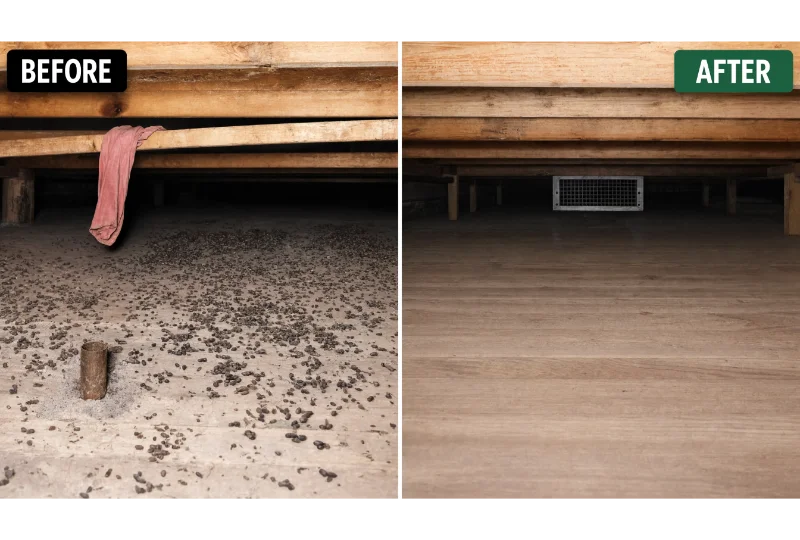
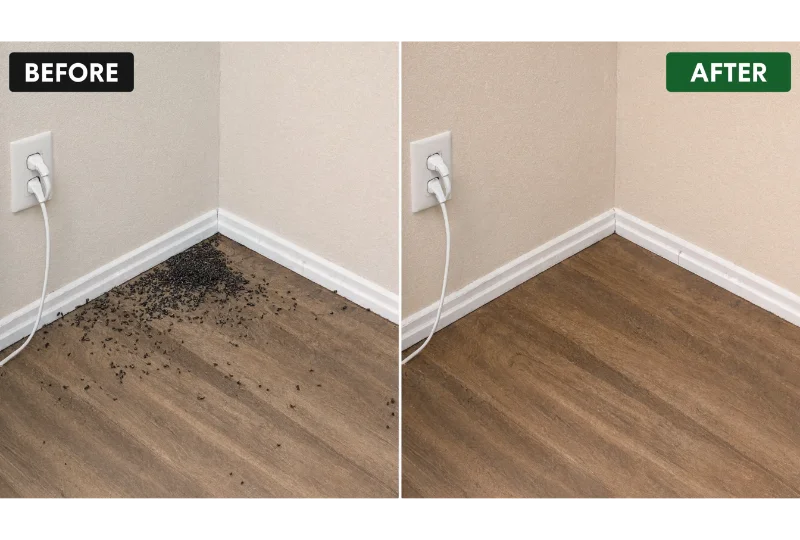
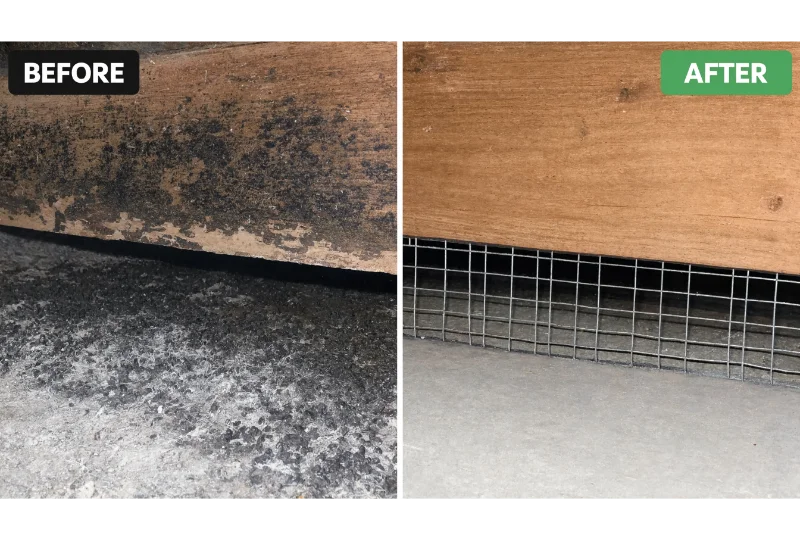
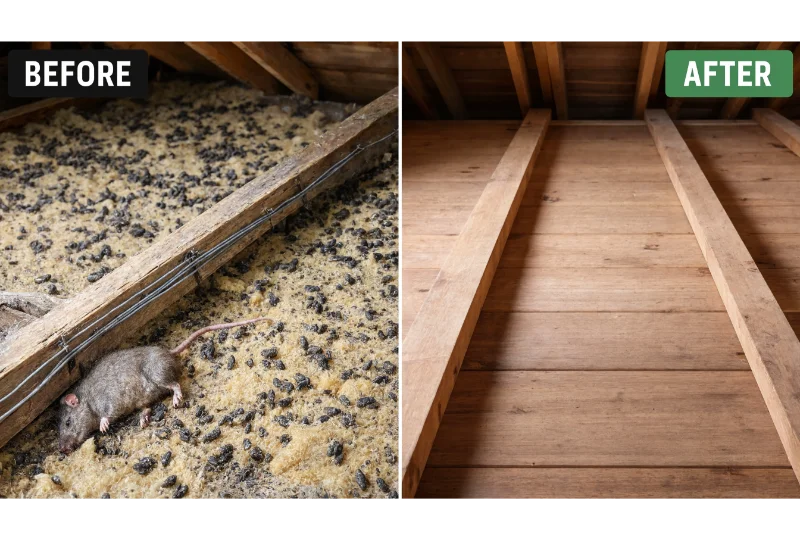
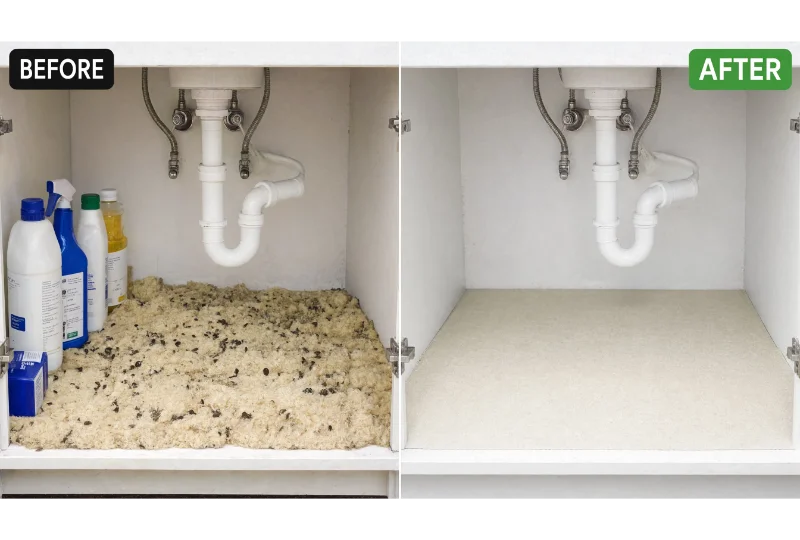
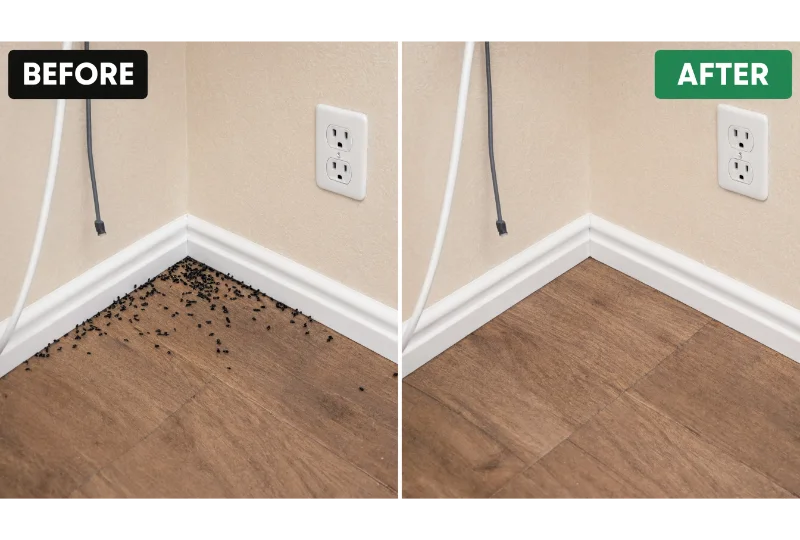
Every before-and-after photo below showcases actual homes in Toledo where our team eliminated rodent infestations, sealed all entry points, and restored insulation damaged by nesting, droppings, and moisture caused by Toledo’s seasonal heavy rainfall.

Before and after dead rodent removal in a rental property managed by a professional property manager.
Before and after professional rodent cleanup and sanitization for a landlord's rental home.
Before and after dead rodent removal showing restored cleanliness in a residential rental property.
Before and after rodent removal service for landlords and property managers to prepare a rental property for tenants.
Before and after odor removal and sanitization after professional dead rodent cleanup.

Who This Service Is For

  • Toledo homeowners hearing scratching in kitchen or basement walls at night
  • Owners of older homes near the Old West End or Maumee River dealing with recurring activity
  • Landlords and property managers needing photo-documented exclusion reports
  • Homeowners bordering wooded metropark land who suspect deer mice rather than house mice
  • Anyone who’s already tried store-bought traps and is still finding droppings

Got Questions?

We’re happy to help. If you can’t find the info you’re looking for, please don’t hesitate to reach out to us!

A three-step process works best: targeted trapping, full exclusion, and sanitation. Traps remove active mice, exclusion seals every gap larger than ¼ inch, and sanitation removes scent trails so new mice don't follow the same path in. In Toledo specifically, freeze-rated materials — stainless hardware cloth and galvanized flashing — matter because winter freeze-thaw movement creates new entry points that standard foam patches miss.
Most companies charge $175–$550 for standard mice removal, depending on how many entry points need sealing and whether attic, basement, or crawl space access is required.
Trap first, then seal. Start with targeted trap placement in known travel corridors — along baseboards, behind appliances, and near rub marks or fresh droppings — then seal active entry points once the mice are confirmed removed. Sealing before trapping just traps mice inside your walls.
Choose a licensed, local specialist who leads with exclusion rather than poison alone, and ask specifically about tamper-resistant station placement if you have kids or pets in the home.
We lead with humane trapping and one-way exclusion devices rather than interior poison. Poison doesn't fix the entry point causing the problem, and it can cause odor issues if a mouse dies inside a wall or attic void.

Serving Toledo homeowners and property managers since 2021 ally connected, freeze-thaw experienced, and 100% rodent-focused.
We stand behind our work: 90-day return protection. If mouse activity returns after our exclusion work, we come back and fix it at no extra charge. No fine print, no exceptions.

We stand behind our work: 90-Day Return Protection. If rodent activity returns after our exclusion work, we come back and fix it at no extra charge. No fine print, no exceptions.

About Us

Rodent Guard Toledo is a local, rodent-only team specializing in rat removal, mice exclusion, attic cleanup, and crawl-space decontamination across Toledo, OH and the surrounding Lucas and Wood County communities. We understand how Toledo’s freeze- haw winters, lake humidity, and mix of century-old and new construction homes let rodents in  and we build permanent, photo-documented fixes for it. No shortcuts, no guesswork, no scare tactics  just a clear plan and a home that stays quiet.

Contact Us

Our Address: 3550 Marine Rd, Toledo, OH 43609, United States

Email: rodentguardtoledo@gmail.com

Phone: +1 (419) 724-4554