Crawl Space Rodent Control — Toledo, OH

If your house suddenly smells like spoiled meat and you can’t figure out why, there’s a good chance something died inside a wall, attic, or crawl space. In Toledo, that smell behaves differently depending on the season and knowing which season you’re in actually helps predict where the carcass is and how urgent the situation is.

Norway Rats and Toledo's Black Swamp Clay

Norway rats are ground burrowers, not climbers, and they need water and soft ground close by to dig effective burrows. Toledo sits on the drained bed of the historic Great Black Swamp a glacial lakebed that left behind thick, heavy clay soil across nearly all of Lucas and Wood County. That clay drains poorly, stays saturated for days after rain, and swells when wet and contracts when dry, which is exactly the kind of ground condition Norway rats prefer for burrowing near foundations.

Add in Toledo’s actual waterways the Maumee River, Swan Creek, the Ottawa River, and the extensive network of drainage ditches left over from the swamp’s 19th-century agricultural drainage system and you get a city with genuinely elevated Norway rat pressure near any property within a few blocks of water or a drainage corridor. Properties near these waterway corridors, along with older homes in low-lying neighborhoods where the clay stays wet longest, carry the highest crawl space rodent pressure in the region.

Waterway risk zones: Maumee River corridor (Old West End, Downtown, Point Place), Swan Creek (Swan Creek Metropark-adjacent neighborhoods), Ottawa River (North Toledo), and any property backing onto a drainage ditch in the older agricultural-drained parts of Lucas or Wood County.

What We Assess in Every Toledo Crawl Space Inspection

Foundation Burrow Evidence

 Every inspection begins with a perimeter check for foundation burrows before we go inside. A 2–3 inch smooth-edged hole with excavated soil mounded next to it is a definitive Norway rat indicator. Active burrows have smooth, worn entry surfaces; unused burrows accumulate cobwebs within a week or two.

Plumbing Line Integrity

Norway rats gnaw through plastic water supply lines, PVC drain pipe, and low-hanging wiring that runs through crawl spaces. A gnawed line can leak for weeks unnoticed, soaking wood framing and setting up mold conditions a particular risk given how slowly Toledo’s clay soil drains to begin with.

Vapor Barrier Condition

Most Toledo crawl spaces have a plastic vapor barrier over the dirt to block ground moisture. Rats and mice tear through it while establishing travel routes across the crawl space floor. Once torn, ground moisture rises straight into the framing above a bigger long-term problem than the rodents themselves, especially given how saturated Toledo’s clay stays through spring.

Droppings and Species Confirmation

Norway rat droppings run about ¾ inch long with blunt, rounded ends clearly larger than the thin, pointed droppings house mice leave behind. Finding them scattered along the crawl space floor near pipe runs, rather than up in the attic, confirms Norway rat as the primary species and points the exclusion work toward the foundation perimeter rather than the roofline.

Sill Plate and Beam Integrity

Wood beams, joists, and sill plates that sit close to damp clay soil are a gnawing target especially in Toledo’s older housing stock, where decades of freeze-thaw movement may have already stressed the wood before rodent damage compounds the problem. Any beam or sill damage found during inspection is flagged separately, since it may need a foundation contractor rather than just pest exclusion.

Moisture and Standing Water

A moisture check across the crawl space floor identifies standing water or damp zones that draw rodents in and encourage mold a real concern given how slowly Toledo’s clay-heavy soil drains, even without any visible rodent activity yet.

Leptospirosis — The Real Risk in a Toledo Crawl Space

Norway rats carry Leptospira bacteria in their urine. Unlike hantavirus, which requires inhaling aerosolized particles, leptospirosis spreads through direct contact with contaminated soil or standing water and the bacteria can survive in wet ground for weeks. A Toledo crawl space with poor drainage, damp clay soil, and an active Norway rat population is exactly the kind of damp environment where that contact risk builds up, particularly after heavy spring rain or snowmelt.

Anyone going under the house for pest work, plumbing, or a DIY inspection should treat a rat-active crawl space as a direct exposure point. Our technicians use nitrile gloves, respiratory protection, and full coveralls on every Toledo crawl space job, especially after heavy rain when soil saturation is highest.

Crawl Space Exclusion — Built for Toledo's Soil and Climate

Inspection Full perimeter check of the foundation, vents, and crawl space interior, with a written report and photos the same day.

Trapping to Zero-Catch No sealing begins until the crawl space is confirmed clear. Sealing over active rats traps them inside, leading to chewed beams and a dead-rodent smell problem later.

Sealing with Corrosion-Resistant Materials Foundation vents get stainless steel mesh instead of standard galvanized screen, which corrodes faster near Toledo foundations exposed to winter road salt runoff and constant moisture from the clay soil. Sill gaps and utility penetrations are sealed with metal flashing and mesh, not foam, foam fails within a Toledo winter or two and can’t stop a rat’s gnawing anyway.

Vapor Barrier Replacement and Enzyme Treatment Torn vapor barrier sections are replaced with heavy 6-mil polyethylene, seams overlapped a minimum of 12 inches, and an enzyme deodorizer is applied to break down scent trails so the next rat doesn’t follow the same path back in.

What Crawl Space Rodent Control Costs in Toledo

No bait-and-switch. You see the ranges before we arrive.

Service

Starting From

Notes

Inspection & Report

$300

Credited toward work

Trapping Program (7–10 days)

$450

Humane removal

Full Exclusion

$200 – $3,500+

Most Toledo crawl spaces

Complex Exclusion

$900 – $6,000+

Extensive burrow damage or waterway-adjacent properties

Vapor Barrier Replacement

$400 – $1,500+

Based on crawl space size

Before & After Rodent Control in Toledo, Real Homes, Real Results

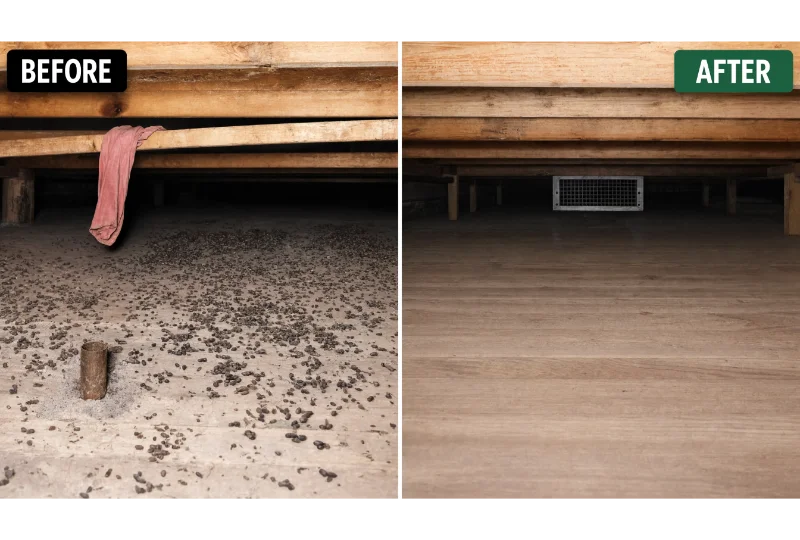
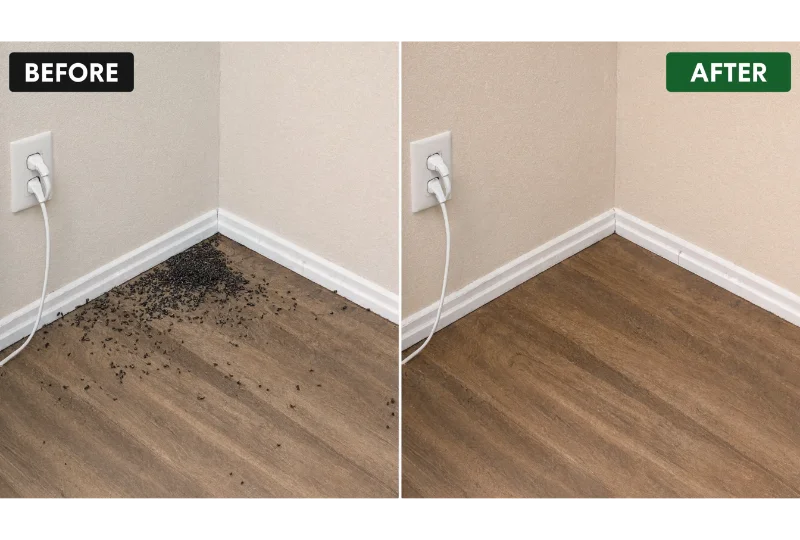
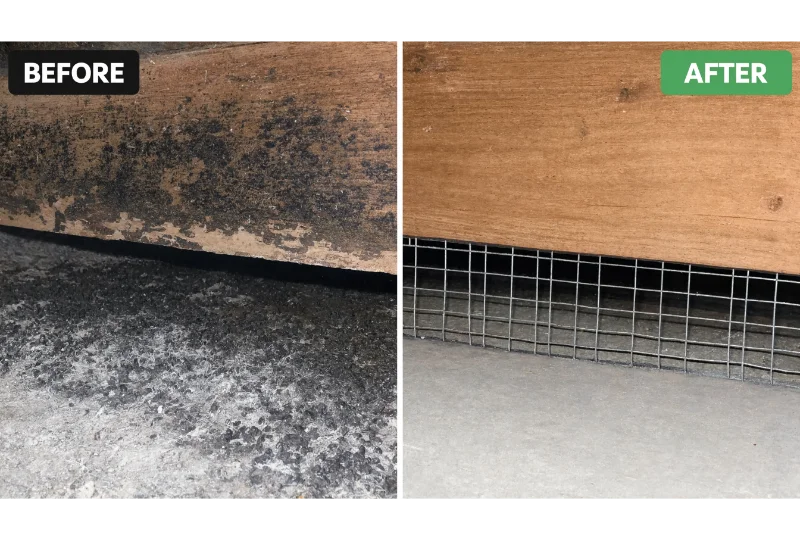
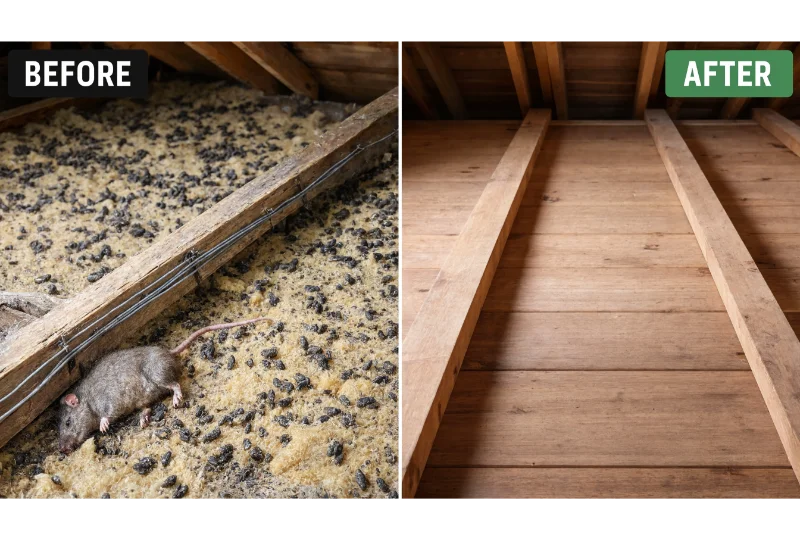
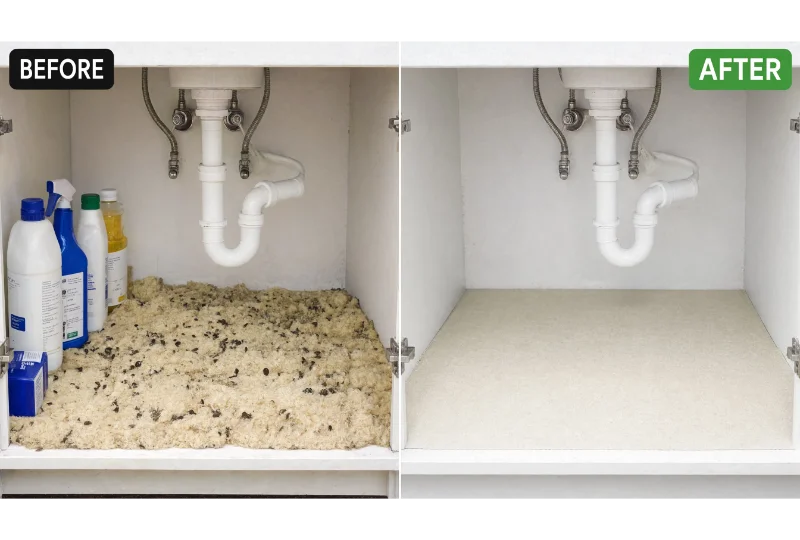
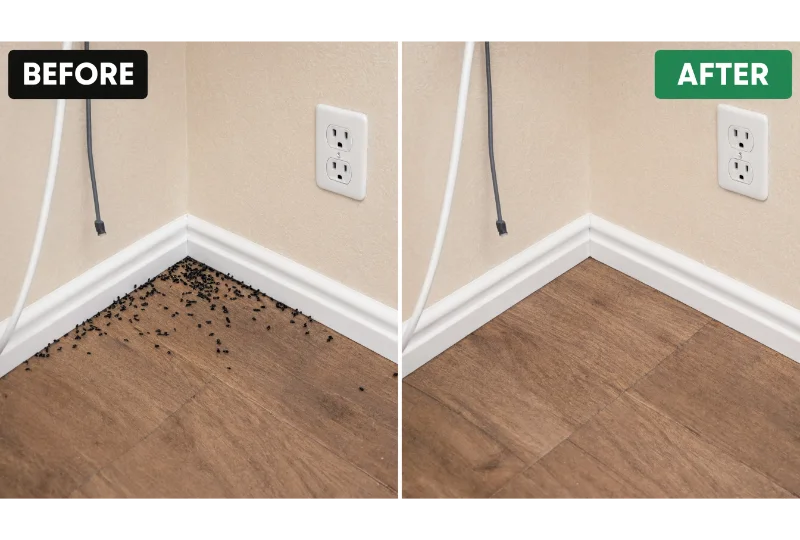
Every before-and-after case below comes from real Toledo-area attics where we removed rodent contamination, restored insulation, and sealed the entry point that caused it.

Before and after dead rodent removal in a rental property managed by a professional property manager.
Before and after professional rodent cleanup and sanitization for a landlord's rental home.
Before and after dead rodent removal showing restored cleanliness in a residential rental property.
Before and after rodent removal service for landlords and property managers to prepare a rental property for tenants.
Before and after odor removal and sanitization after professional dead rodent cleanup.

Got Questions?

We’re happy to help. If you can’t find the info you’re looking for, please don’t hesitate to reach out to us!

Fresh burrow holes with excavated soil directly at the foundation line, droppings on the crawl space floor near pipe runs, and gnaw marks on plumbing lines all confirm interior activity rather than just yard burrows. A yard burrow alone doesn't necessarily mean the crawl space itself is compromised — but it's worth checking both.
If your home has foundation vents near ground level, an access door at the base of an exterior wall, and floors that feel slightly springy underfoot, it likely has a crawl space. Slab-on-grade homes sit flat on the ground with no vents or access door.
For properties near the Maumee River, Swan Creek, or a drainage ditch, yes — Norway rat pressure in these areas is high enough that damage can happen well before any signs are visible from inside the home. An annual check, especially after a wet spring, catches problems early.
Most single-family crawl spaces run $200–$3,500 for full exclusion, with vapor barrier replacement and any plumbing damage adding to that depending on severity.
Not usually. Once access is arranged — a lockbox code, a garage entry, or a scheduled time — we can complete the inspection and most exclusion work without the homeowner needing to be onsite the entire time.

We stand behind our work: 90-Day Return Protection. If rodent activity returns after our exclusion work, we come back and fix it at no extra charge. No fine print, no exceptions.

About Us

Rodent Guard Toledo is a local, rodent-only team specializing in rat removal, mice exclusion, attic cleanup, and crawl-space decontamination across Toledo, OH and the surrounding Lucas and Wood County communities. We understand how Toledo’s freeze- haw winters, lake humidity, and mix of century-old and new construction homes let rodents in  and we build permanent, photo-documented fixes for it. No shortcuts, no guesswork, no scare tactics  just a clear plan and a home that stays quiet.

Contact Us

Our Address: 3550 Marine Rd, Toledo, OH 43609, United States

Email: rodentguardtoledo@gmail.com

Phone: +1 (419) 724-4554