Rodent Control in Oregon, OH — Drainage Ditches, Postwar Homes, Lake Erie Moisture

Oregon sits on the shore of Lake Erie and Maumee Bay, just east of Toledo in Lucas County. It’s built on what used to be the Great Black Swamp and the network of drainage ditches cut along its roadways to carry stormwater into Maumee Bay is still doing that job today. That same drainage network is one of the biggest reasons Oregon sees heavier Norway rat pressure than drier inland suburbs. Add a housing stock that’s mostly single-family homes built between the 1950s and 1990s ranch and split-level construction now 35 to 75 years old and you get a rodent problem shaped by both water and age.

The Oregon Rodent Picture

Oregon’s history explains its rodent pressure better than almost any other factor. The city was carved out of the Great Black Swamp, and the drainage ditches built along its roadways to move stormwater toward Maumee Bay are still the primary drainage system in many neighborhoods. Norway rats thrive in exactly this kind of environment ditches, culverts, and low-lying wet ground give them cover and a direct travel route toward home foundations, especially in older sections of the city where ditch lines run close to backyards.

Layered on top of that is the age of Oregon’s housing. Most of the city’s single-family homes were built during the postwar boom of the 1950s through the 1990s, when Oregon’s population more than doubled and farmland turned into subdivisions. Homes from that era typically have block or poured foundations with crawl space or basement vents that are now decades past their original install and vent screens, HVAC penetrations, and garage seals from that period have had 30-plus years to fail. In the newer pockets of the city, particularly the subdivisions built closer to Maumee Bay State Park in the southern and northern edges of Oregon, construction is more recent but still develops the same standard entry points HVAC lines, garage thresholds, dryer vents just on a shorter timeline.

Lake Erie’s humidity adds a constant moisture factor most inland Ohio suburbs don’t deal with. Damp crawl spaces and basements near the lakeshore and around Maumee Bay are more attractive to both Norway rats and house mice looking for a stable, moist environment close to a food source.
Oregon — Primary Entry Points We Find

1. Drainage Ditch and Culvert-Adjacent Foundations

Homes on or near Oregon’s roadside drainage ditch network,a legacy of the city’s Great Black Swamp drainage system see the heaviest Norway rat activity in our service area. Rats burrow along ditch banks and travel toward the nearest foundation gap, particularly around older block foundations with settled mortar joints.

2. Postwar Foundation Vents and Crawl Space Openings

Oregon’s ranch and split-level homes from the 1950s–1990s typically have foundation or crawl space vent screens that are original to the home. Aluminum and galvanized screens corrode over decades of Lake Erie humidity and freeze-thaw cycling, opening gaps well past the quarter-inch mouse entry threshold.

3. Garage Door Weatherstripping

A consistent finding across every era of Oregon home. Compressed or torn garage seals give house mice direct ground-level access, and with garages commonly used for stored pet food, birdseed, and recycling, they’re one of the fastest-established entry points we see.

4. HVAC and Dryer Vent Penetrations

Whether it’s a 1960s ranch home or a newer build near Bay Meadow Estates, foam-sealed utility penetrations fail over time. Lake-effect humidity accelerates the breakdown of standard foam seals faster than in drier inland Ohio communities, making this one of the most common findings on our Oregon inspections regardless of a home’s age.

Primary Species in Oregon Homes

Norway Rat — Ditch and Drainage Corridor Species

The dominant rat species in Oregon’s low-lying, ditch-drained neighborhoods. Burrows along ditch banks, culverts, and damp foundation perimeters; travels storm drainage lines toward home foundations. Larger and heavier-bodied than a house mouse, with a blunt nose and a tail shorter than its body length. Gnaws through wiring, insulation, and stored goods, and contaminates crawl spaces and basements with droppings.

House Mouse — Year-Round Home Invader

Found in Oregon homes of every age and neighborhood, from postwar ranches to newer construction near the bay. Breeds continuously indoors once established up to 10 litters a year and needs only a pencil-width gap to get in around a garage door or utility line.

Why Trapping Alone Doesn't Solve an Oregon Rodent Problem

Most of the repeat rodent calls we get in Oregon follow the same pattern: a homeowner had traps set or bait placed, activity dropped for a few weeks, then came right back. Trapping thins the population that’s already inside, but it does nothing about the ditch-line burrow, the corroded vent screen, or the garage door gap that let them in to begin with. In neighborhoods next to Oregon’s drainage ditches, new rats will simply move in from the same burrow network the moment the old population is removed.

A lasting fix needs three things done together: structural exclusion with steel mesh and durable sealant at every entry point (not foam alone, which breaks down faster in Lake Erie’s humidity), sanitation to clear the scent trails that pull new rodents toward a previously infested area, and a follow-up inspection after the first hard freeze-thaw cycle to catch any new gaps that seasonal shifting opens up. Leave any one of those out and the same address tends to call again the following year.

Cost of Rodent Control in Perrysburg

No bait-and-switch. You see the ranges before we arrive.

Service

Price

Inspection

$350

Trapping

$500

Full Exclusion

$250 – $4,200+

Complex Exclusion

$1,200 – $8,500+

Attic / Crawl Cleanup

$750 – $5,500+

Ottawa Hills homes with significant tree canopy contact, original 1920s-era roofing, or a lot backing to the Ottawa River often run toward the higher end of these ranges because of the added roofline and riverbank entry points involved.


Real Toledo Homes, Real Rodent Removal Success Stories

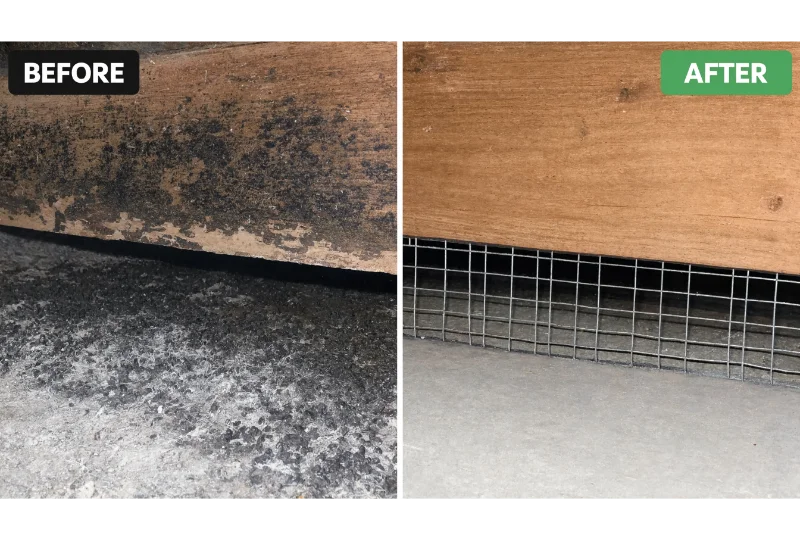
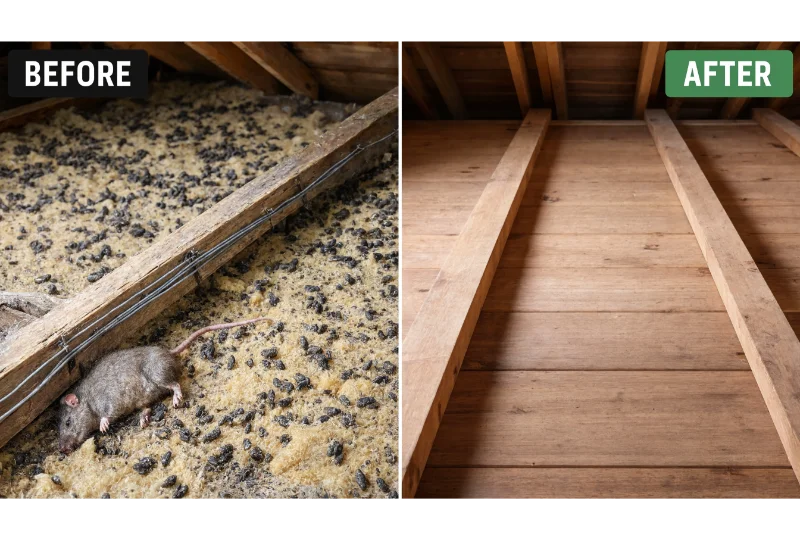
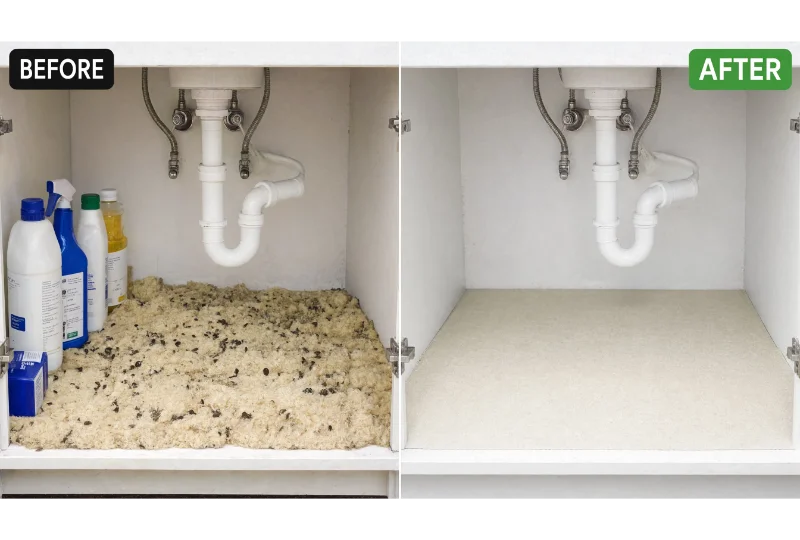
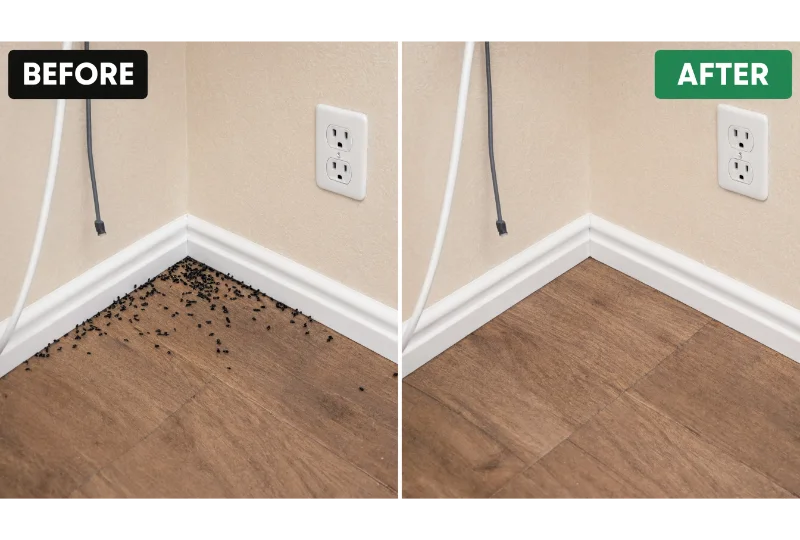
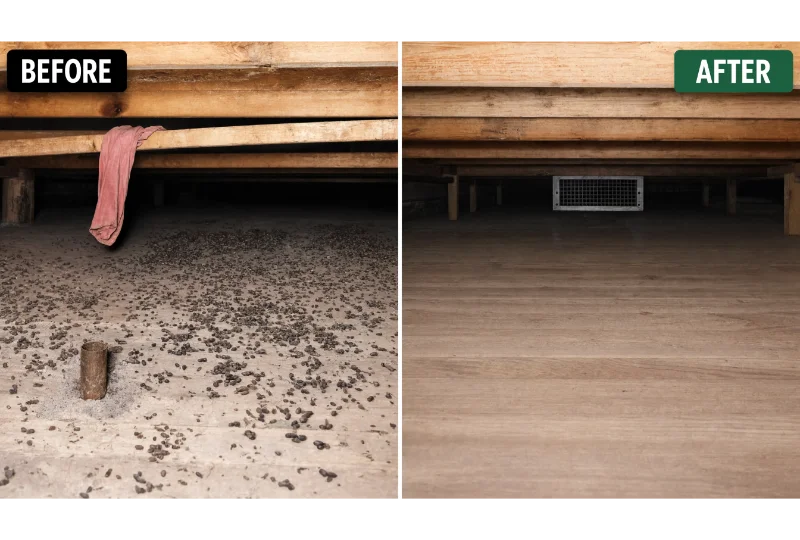
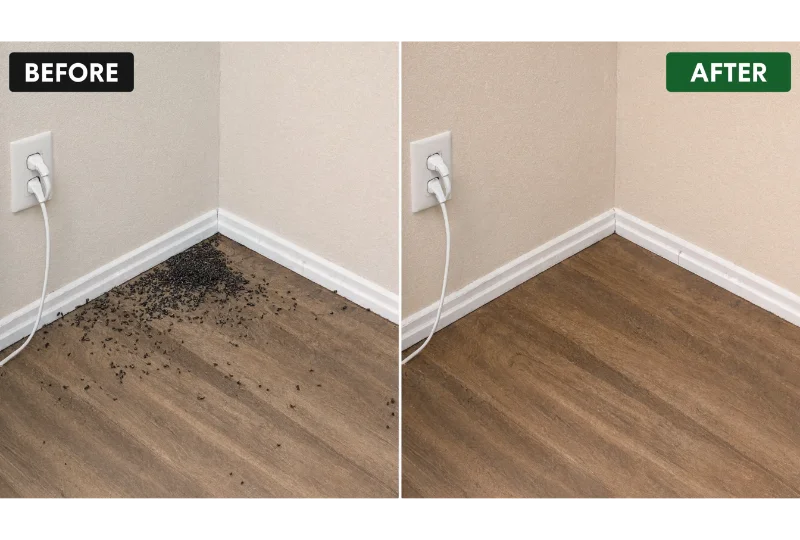
Every before-and-after photo below showcases actual homes in Toledo where our team eliminated rodent infestations, sealed all entry points, and restored insulation damaged by nesting, droppings, and moisture caused by Toledo’s seasonal heavy rainfall.

Before and after dead rodent removal in a rental property managed by a professional property manager.
Before and after professional rodent cleanup and sanitization for a landlord's rental home.
Before and after dead rodent removal showing restored cleanliness in a residential rental property.
Before and after rodent removal service for landlords and property managers to prepare a rental property for tenants.
Before and after odor removal and sanitization after professional dead rodent cleanup.

Serving Oregon and the Greater Toledo Area

Areas near Maumee Bay State Park Newer construction, bay-adjacent moisture pressure Bay Meadow Estates and surrounding new-build subdivisions Recent construction, HVAC and garage entry points Established postwar neighborhoods (1950s–1990s ranch and split-level) Aging vent screens and foundation seams Areas along Oregon’s drainage ditch network Highest Norway rat pressure in the city Northwood Neighboring Wood County community Toledo  Greater metro service area Jerusalem Township / Lakeshore areas Adjacent lakefront communities

Got Questions?

We’re happy to help. If you can’t find the info you’re looking for, please don’t hesitate to reach out to us!

Yes — ditch-adjacent and bay-area properties are some of the most common calls we get in Oregon, and we inspect ditch banks and low-lying foundation areas as a standard part of every visit here.
[PRICING INFO — e.g. "Inspections start at $X. Full exclusion typically runs $X–$X depending on the home's age and number of entry points."]
We offer same-day or next-day service across Oregon and the greater Toledo area in most cases. Call [PHONE NUMBER] to check current availability.

We stand behind our work: 90-Day Return Protection. If rodent activity returns after our exclusion work, we come back and fix it at no extra charge. No fine print, no exceptions.

About Us

Rodent Guard Toledo is a local, rodent-only team specializing in rat removal, mice exclusion, attic cleanup, and crawl-space decontamination across Toledo, OH and the surrounding Lucas and Wood County communities. We understand how Toledo’s freeze- haw winters, lake humidity, and mix of century-old and new construction homes let rodents in  and we build permanent, photo-documented fixes for it. No shortcuts, no guesswork, no scare tactics  just a clear plan and a home that stays quiet.

Contact Us

Our Address: 3550 Marine Rd, Toledo, OH 43609, United States

Email: rodentguardtoledo@gmail.com

Phone: +1 (419) 724-4554