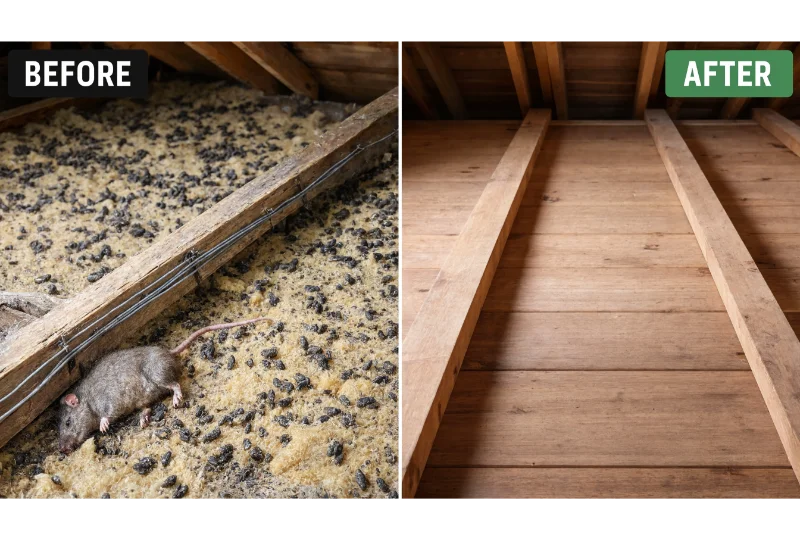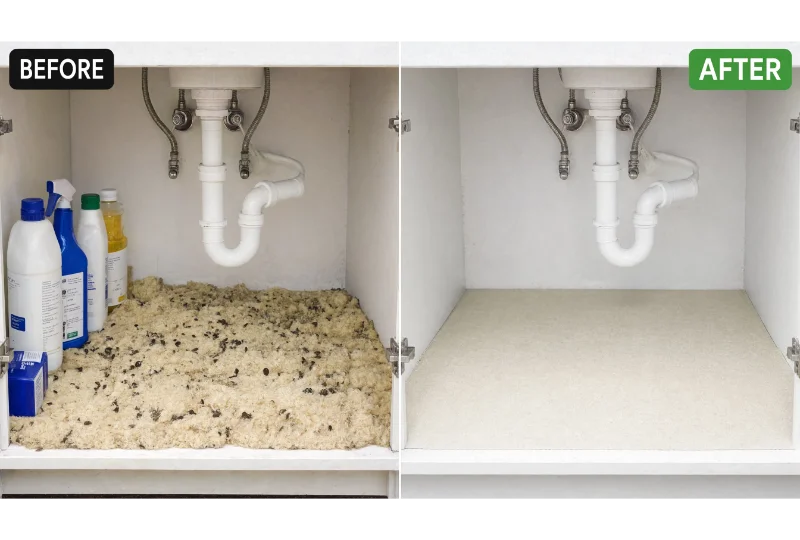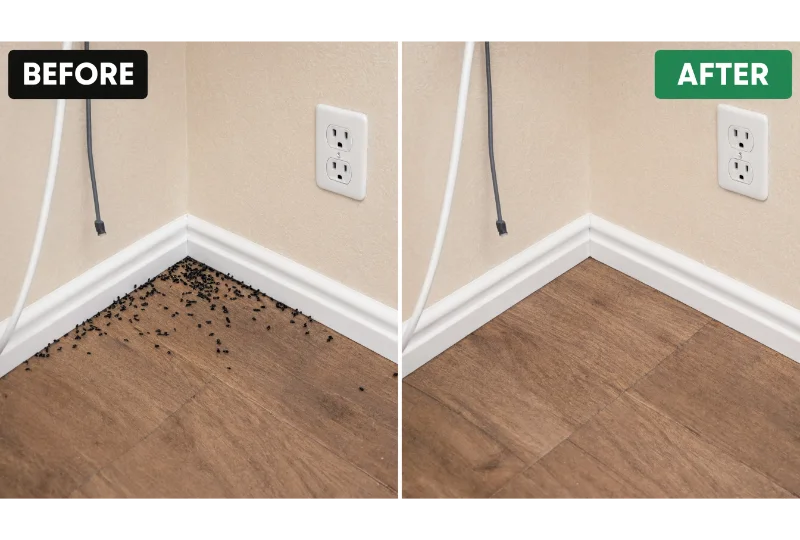
What's Actually Happening Inside Your Walls
A dead rodent starts producing decomposition gases within hour, the same compounds (putrescine and skatole among them) responsible for that unmistakable rotten-meat smell. How fast that smell shows up depends entirely on temperature, and Toledo’s seasonal swing is wide enough that the timeline genuinely changes.
In Toledo’s humid summer heat, decomposition moves fast noticeable odor within 1–2 days, typically peaking within the first week, similar to what warmer-climate cities deal with year-round.
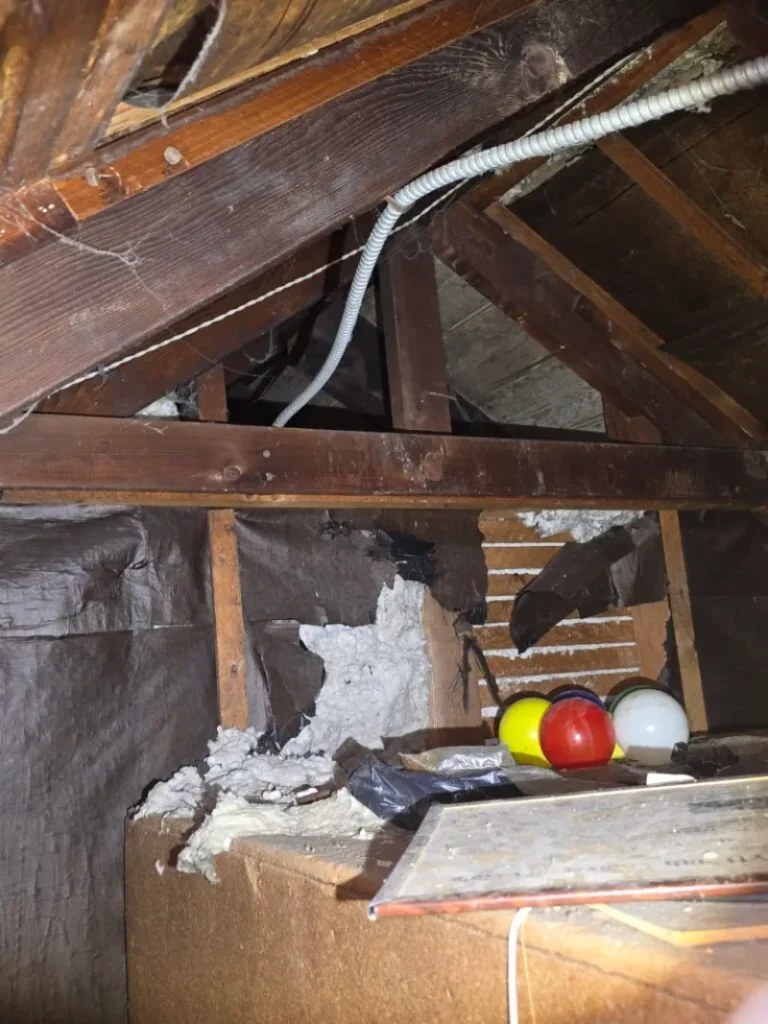
In Toledo’s cold winter months, the opposite happens. A carcass in an unheated attic, garage, or vacant property can partially freeze, delaying decomposition for weeks. This produces a specific and confusing pattern we see every spring: a property that “smelled fine all winter” suddenly develops an overwhelming odor once temperatures climb back above freezing and the frozen remains finally begin to break down.
Even after the carcass is fully decomposed, body fluids that soaked into insulation, drywall, or wood framing keep producing odor for a while longer. In an open room, that smell disperses. In a sealed wall cavity or attic, it concentrates which is why a single mouse can make an entire room unbearable.