Our Rodent Control Process in Toledo, OH — From First Call to a Permanently Quiet Attic

Six defined steps. No open-ended monthly contracts. No poison scattered through your attic or walls. This is exactly what happens when you call Rodent Guard Toledo, from the first phone call to a written close-out report, built around Toledo’s freeze-thaw winters, Maumee River and Lake Erie humidity, and a housing stock that ranges from century-old Old West End homes to postwar ranch subdivisions.

Step 1 Phone Triage · Day 0 Step 2 On-Site Inspection · Day 1 Step 3 Trapping Phase · Days 1–14 Step 4 Exclusion Sealing · After confirmed zero-catch Step 5 Cleanup & Sanitation Step 6 Close-Out Report · Guarantee starts

The Six Steps — What Actually Happens at Your Toledo Property

1. Phone Triage — Species Identified Before We Ever Knock

Every job starts with a short call before anything gets scheduled. We ask what you’re hearing and when: scratching and running along the ceiling at night, especially near an attic edge close to a tree line, usually points to house mice or, in wooded and river-adjacent lots, deer mice working their way in as temperatures drop each fall. Digging or burrow holes near the foundation, garage slab, or a low spot in the yard point to Norway rats the dominant rat species across the Toledo area, especially in neighborhoods near the Maumee River, drainage ditches, and older sewer lines.

We also ask about your home’s age and construction a brick Old West End or Old Orchard home from the early 1900s behaves differently than a 1970s ranch in a Toledo suburb or a newer build further out whether the sounds are coming from the attic, garage, kitchen wall, or basement, and whether the property has been vacant. By the end of the call we already have a working species hypothesis, which changes what equipment goes on the truck and where the technician starts looking first.

Why this step matters: A technician arriving prepared for an attic-level mouse job when the actual problem is a Norway rat burrow at the foundation wastes the first visit and delays the real fix.

2. On-Site Inspection — Photo-Documented, Same Day

This is the step most general pest control companies in the Toledo area skip or shortcut and it’s the one that actually determines whether the problem comes back in a few weeks. A ground-level walk-around alone misses most of what matters on an older Toledo-area home. Our inspection covers:

  • Foundation and sewer line penetrations the most common Norway rat entry point on homes near the Maumee River, drainage ditches, or older municipal sewer lines
  • Foundation and crawl space vent screens original aluminum or galvanized screens on homes built before the 1990s are frequently corroded past the quarter-inch mouse entry threshold
  • HVAC and dryer vent penetrations foam seals fail faster in Lake Erie’s humidity than in drier inland climates
  • Garage door thresholds and weatherstripping a consistent finding across every home age and neighborhood in Greater Toledo
  • Roofline and attic access points soffit gaps, ridge vents, and tree-branch contact points on wooded or established lots
  • Basement and crawl space moisture condition damp basements near the river or lake are more attractive to both species

3. Trapping Phase — No Poison Left in Your Walls

We don’t seal a single entry point until the interior population is confirmed clear. Sealing too early traps animals inside the structure a trapped rodent chews through drywall trying to get out, and if it dies in a wall cavity, you’re left with a decomposition odor problem that’s far worse than the original scratching noise.

Traps are placed the same day or the next day after inspection approval, positioned along confirmed travel routes not scattered randomly through the attic or crawl space. We use mechanical trapping rather than rodenticide bait wherever the structure allows it, because a poisoned rodent that dies inside a wall cavity or attic space decomposes in place, and there’s no way to retrieve it or control where the odor shows up. Trapping continues until a run of consecutive zero-catch days confirms the space is clear not a calendar date, not a guess.

4. Exclusion Sealing — Materials Built for Ohio's Freeze-Thaw Cycle

Every A- and B-rated entry point identified in the inspection gets sealed once trapping confirms the interior is clear. Material choice matters as much as labor here: Toledo’s winters put every seal through repeated freeze-thaw cycling, and Lake Erie’s added humidity accelerates the breakdown of cheap materials faster than in drier parts of Ohio. We use:

  • Stainless steel hardware cloth (¼-inch openings) for all mesh applications standard galvanized mesh corrodes and loses structural integrity within a few Ohio winters, reopening the exact gap it was meant to close
  • Galvanized flashing at fascia, foundation sills, and other structural gaps that need a rigid seal rather than mesh
  • UV-stabilized vent covers with mesh backing for foundation, gable, and ridge vents
  • Durable, freeze-tolerant sealant at masonry and mortar joint gaps on older homes, rather than standard caulk, which cracks and loses adhesion under repeated temperature swings

5. Cleanup & Sanitation — Removing the Scent Trail, Not Just the Rodents

Once rodents have been active in an attic, crawl space, or wall void, the droppings, urine, and nesting material left behind are a sanitation issue, not just an odor problem. Norway rat and house mouse waste can carry Salmonella and other bacteria, and in wooded or river-adjacent properties where deer mice are present, dried droppings carry an added hantavirus risk that calls for extra care during removal droppings should never be swept or vacuumed with a standard shop vacuum, which aerosolizes fine particles.

Our cleanup includes HEPA-filtered vacuum removal of droppings and nesting material, disinfectant application before physical disturbance, and an enzyme-based deodorizer applied to all confirmed travel routes. The deodorizer step matters more than most homeowners expect: pheromone scent trails left behind on rafters and in insulation signal “established territory” to new rodents probing the same area later, even after every entry point has been sealed. Skipping this step is one of the most common reasons a “resolved” job shows new activity the following season.

6. Close-Out Report + [GUARANTEE PERIOD]-Day Return Guarantee

Every job ends with a written, photo-documented report: what was found, what species was confirmed, every entry point sealed with a before/after photo, and any wiring or insulation damage noted for follow-up. This isn’t a verbal “all set” it’s documentation you can keep for a home sale, a landlord’s lease file, or an insurance claim if gnaw damage to wiring was found.

From there, the [GUARANTEE PERIOD]-day return guarantee begins. If rodents re-enter through any point we sealed within that window, we come back and fix it at no charge no deductible, no fine print. We also recommend a follow-up inspection after the first hard freeze-thaw cycle of the season, since Ohio’s winter structural movement is the single biggest cause of new gaps opening in an otherwise fully sealed home.

Why Skipping a Step Causes the Problem to Come Back

Skip the phone triage → wrong equipment, wrong starting point, a wasted first visit.

Skip the full roofline/foundation inspection → most active entry points on an older Toledo-area home go unnoticed, because a ground-level walk-around alone doesn’t catch foundation vent corrosion, sewer line gaps near the river, or roofline contact points.

Skip or rush trapping → sealing with rodents still inside creates a trapped colony that chews through drywall trying to get out.

Seal with foam or standard mesh instead of freeze-rated materials → the seal degrades within one or two Ohio winters, and the same entry point reopens.

Skip sanitation → leftover scent trails recruit the next generation of rodents through any future gap, even after every point has been sealed.

Skip the written report → no documentation for a home sale, a landlord’s file, or an enforceable guarantee.

Our Process vs. a Typical Monthly Pest Subscription

Monthly rodent subscription plans common across the Toledo pest control market are built on a model with no defined endpoint. The subscription continues because removing it removes the only thing managing the population. Exclusion sealing, the step that would actually produce a permanent result, is often not included at all, or is limited to bait station placement rather than structural entry point work.

What MattersMonthly Subscription ModelOur 6-Step Process
Inspection depthGround-level walk-around, or noneFoundation, roofline, vents, sewer lines — fully photo-documented
Entry-point sealingRarely included, or bait stations only¼-inch stainless mesh, galvanized flashing, freeze-rated sealant
End dateNone — billed indefinitelyDefined close-out with written report
DocumentationVerbal summaryPhoto-documented, before/after, by location
GuaranteeVaries by provider[GUARANTEE PERIOD]-day return guarantee, no exceptions
MaterialsStandard foam/plastic meshFreeze-thaw-rated stainless & galvanized

Real Toledo Homes, Real Rodent Removal Success Stories

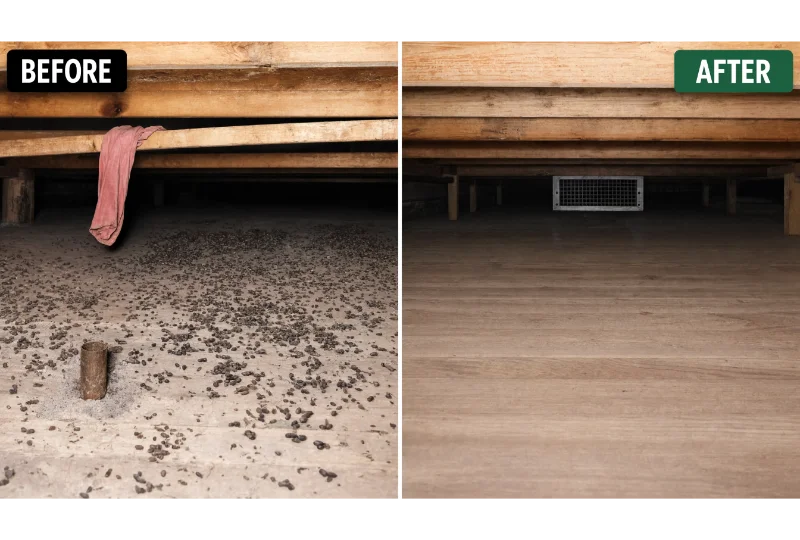
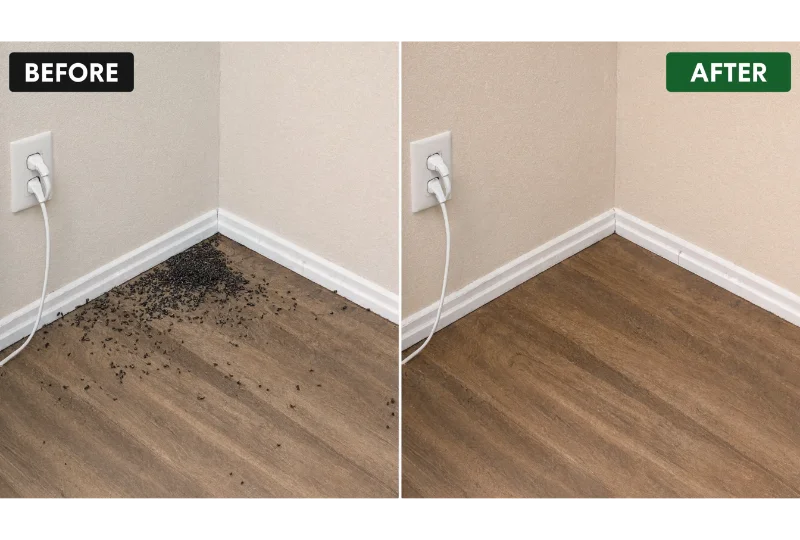
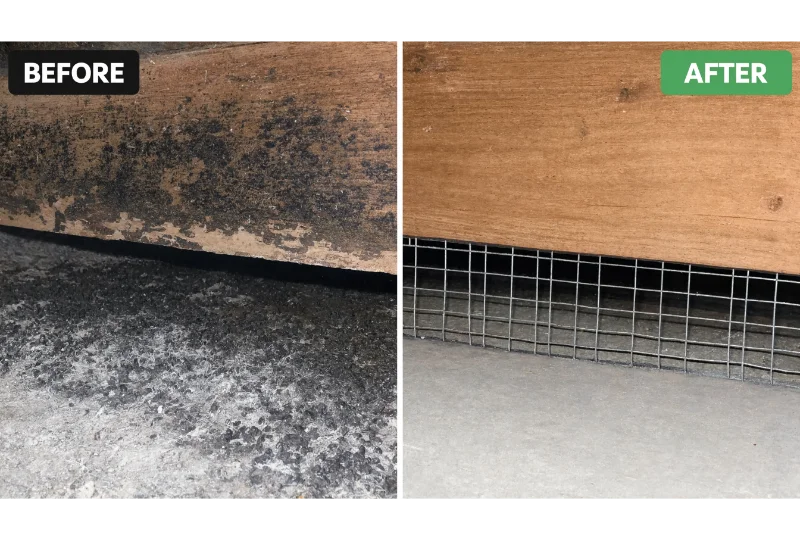
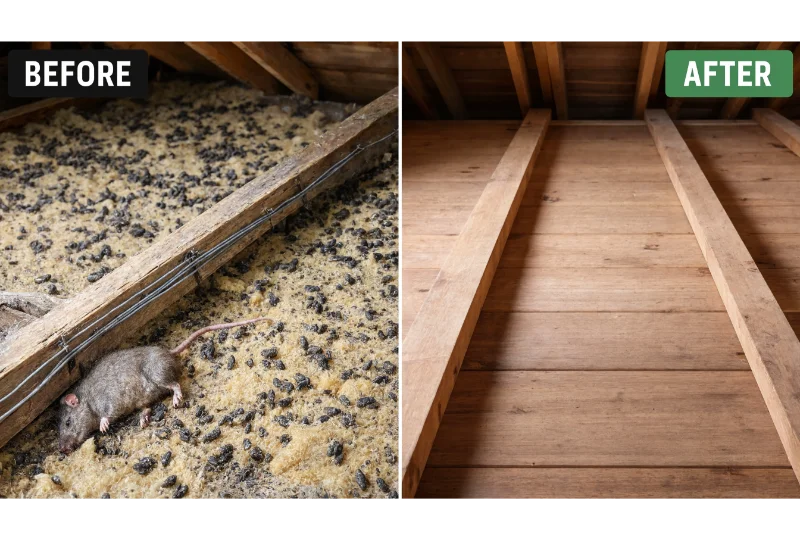
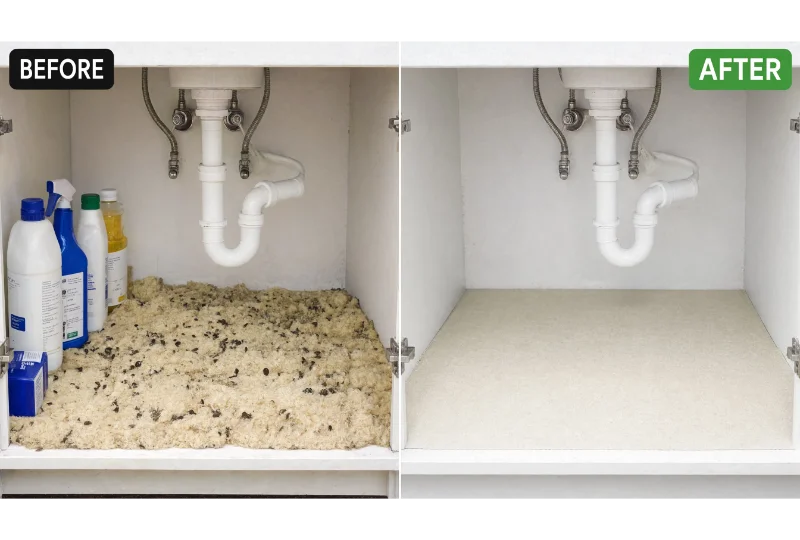
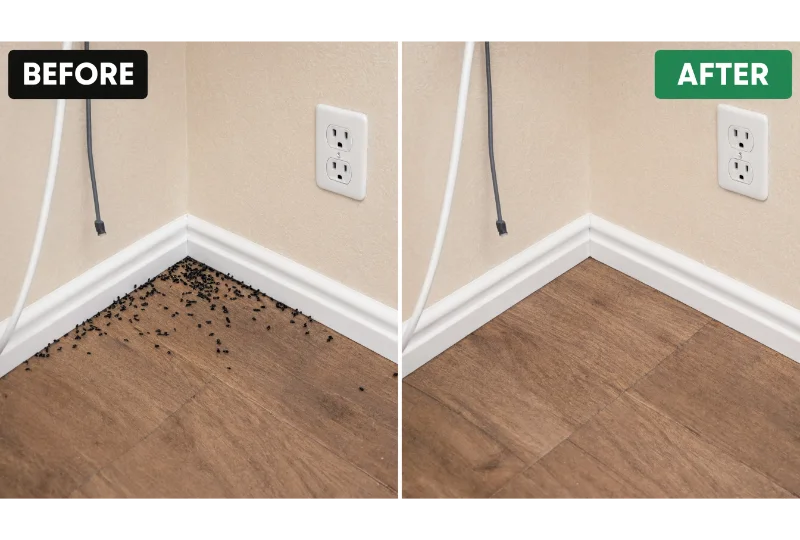
Every before-and-after photo below showcases actual homes in Toledo where our team eliminated rodent infestations, sealed all entry points, and restored insulation damaged by nesting, droppings, and moisture caused by Toledo’s seasonal heavy rainfall.

Before and after dead rodent removal in a rental property managed by a professional property manager.
Before and after professional rodent cleanup and sanitization for a landlord's rental home.
Before and after dead rodent removal showing restored cleanliness in a residential rental property.
Before and after rodent removal service for landlords and property managers to prepare a rental property for tenants.
Before and after odor removal and sanitization after professional dead rodent cleanup.

Got Questions?

We’re happy to help. If you can’t find the info you’re looking for, please don’t hesitate to reach out to us!

Most single-family jobs move from inspection to full close-out within 2–3 weeks, depending on how quickly trapping confirms zero activity.
No — many of our Toledo-area customers, including landlords and out-of-town owners, coordinate access remotely. We send photo documentation at every stage.
No. We rely on mechanical trapping wherever the structure allows it, specifically to avoid the decomposition and odor problems that come with rodenticide use inside occupied living space.
Any point we sealed is covered under our 90-day return guarantee. If activity returns through a sealed point within that window, we return and resolve it at no charge.

We stand behind our work: 90-Day Return Protection. If rodent activity returns after our exclusion work, we come back and fix it at no extra charge. No fine print, no exceptions.

About Us

Rodent Guard Toledo is a local, rodent-only team specializing in rat removal, mice exclusion, attic cleanup, and crawl-space decontamination across Toledo, OH and the surrounding Lucas and Wood County communities. We understand how Toledo’s freeze- haw winters, lake humidity, and mix of century-old and new construction homes let rodents in  and we build permanent, photo-documented fixes for it. No shortcuts, no guesswork, no scare tactics  just a clear plan and a home that stays quiet.

Contact Us

Our Address: 3550 Marine Rd, Toledo, OH 43609, United States

Email: rodentguardtoledo@gmail.com

Phone: +1 (419) 724-4554